
Michael Jackson: The Verdict, Vindication Day and the Not Guilty Truth Netflix Don't care about
What do you see?
What do you see?
I don't mean what were you told to see.
I don't mean what the tabloids trained you to see, back when cruelty wore a press pass and public humiliation was sold as journalism.
I mean what do you actually see?
Because that question sits at the heart of Michael Jackson's life.
It sits in the music, the masks, the shadows, the ghosts, the mirrors, the monsters, the lonely hearts, and that strange, painful way he kept asking the world to look again.
Not just at him.
At itself.
Michael understood something most people spend their whole lives avoiding.
People often see in others what already lives inside themselves.
Look at softness and see danger? That tells me something.
Look at empathy and see strategy? That tells me something too.
Look at childlike wonder and immediately sexualise it? Well, now we're getting somewhere, and none of it is flattering.
Because if you can look at a traumatised man trying to build a world of music, play, flowers, trains, animals, arcades, fairground rides, and sick children getting one day away from hospital machines, and all you can see is something sinister, maybe the monster you're pointing at is not standing where you think it is.
Maybe he is not the one exposing himself.
Maybe you are.
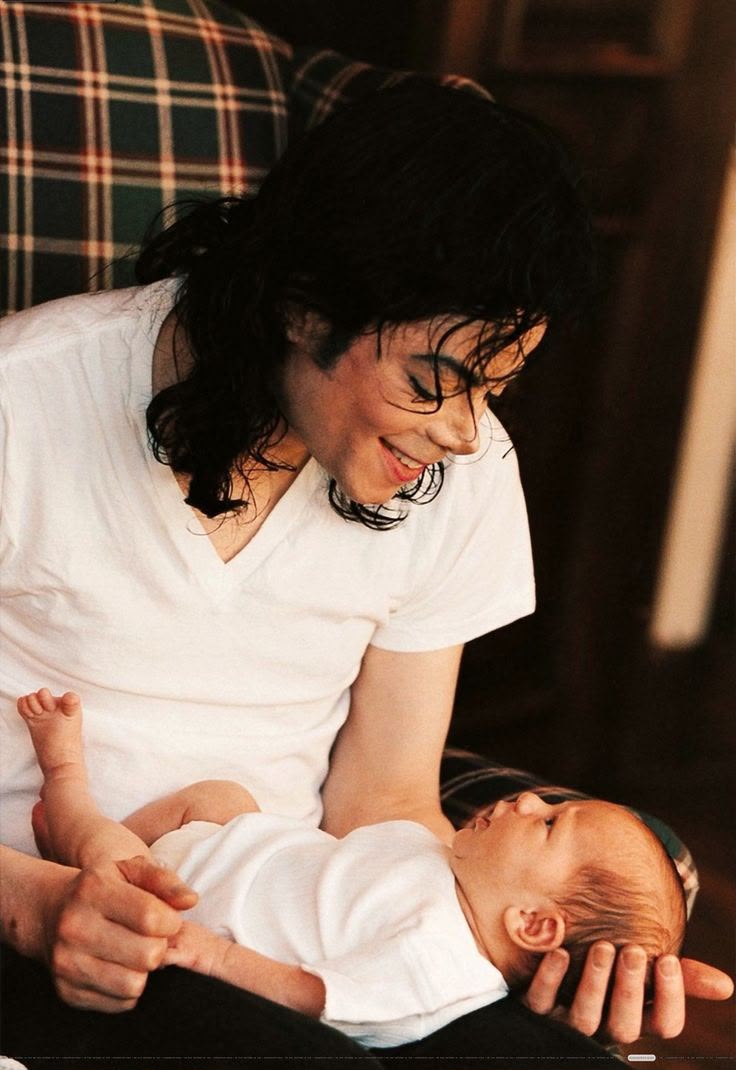
That is where Vindication Day begins for me.
That is where Vindication Day begins for me.
With a question.
What do you see?
On June 13th 2005, after months of public humiliation, media filth, courtroom theatre and a trial that visibly drained the life out of him, Michael Jackson was found not guilty.
Every charge failed.
A jury sat through the evidence. They heard the witnesses. They watched the prosecution try to build its case. They deliberated for more than thirty hours.
Then they said no.
That should have mattered.
In court, it did.
In the media, apparently not so much.
By then, the machine had already done its job. The monster had been sketched out for the public, and all they had to do was colour it in with whatever rotten little thoughts they had lying around.
Plenty of them did.
The trial was treated like entertainment. Don't let anyone tidy that up now and pretend it was sober legal coverage by serious people doing serious work.
It was a feeding frenzy with microphones.
We saw the cameras outside court every day. The shouting. The jokes. The panels. The prison speculation. The jail cells shown before a verdict had even been reached.
We saw grown adults on television acting like a man's possible imprisonment was the final episode of a talent show.
And Michael had to walk into that.
Every day.
Not as a headline.
As a human being.
That is the bit they never want to sit with.
The human being.
They prefer the circus version. The strange outfits. The pyjamas. The umbrella. The whispers. The weird celebrity shorthand that lets people laugh without having to feel cruel.
But if you watched him properly, and I mean really watched him, you saw something else.
You saw a man being slowly crushed.
It was in his face.
The exhaustion.
The pain in his body.
The way he moved like every step had started costing him something.
The light behind his eyes began to dim in public, and people still laughed.
They mocked him while he was visibly unwell. His clothes. His body. His face. His voice. The way trauma sat on him. The way fear changed him. The way public destruction looked when it had a famous name attached to it.
That is how dehumanisation works.
Make someone ridiculous first, and cruelty starts looking like comedy.
Michael Jackson had been made ridiculous for years.
The world had already turned him into a cartoon before the trial began. Too strange to defend, too famous to pity, too unusual to understand, too damaged for tenderness, and too complicated for people who need every story served in toddler portions with a plastic spoon.
So when the accusations came, the world didn't pause.
It pounced.
And twenty-one years later, people are still pouncing.
Only now they do it on podcast clips and X threads, with their imagined moral superiority hanging out like a Primark thong over low-rise jeans.
They repeat the same phrases with the confidence of people who have never read the case.
"The description matched."
"He shared beds with kids."
"He paid kids off."
There they are.
The three little mental Pot Noodles of the permanently incurious.
Quick. Dirty. No nutritional value.
Let's keep this simple.
The "matching description" claim is not the clean courtroom fact people pretend it is. If it really was the slam-dunk proof the public has been told it was, ask yourself why it wasn't used in 2005 as the prosecution's knockout blow.
Why has it lived more powerfully in media folklore than in court evidence?
That should make you curious.
Bed-sharing is another one. Michael's boundaries were unusual. A lot of people find them uncomfortable, and I understand why. But discomfort is not evidence, and unusual is not the same as criminal.
Especially when people dragged into that narrative testified under oath that nothing happened.
Again, curiosity would be useful here.
Try it. It's less embarrassing than chanting headlines like a drunk parrot.
Then there is the settlement.
A civil settlement is not a criminal conviction. It is not an admission of guilt. It did not stop a criminal investigation.
The phrase "paid off" sounds filthy enough to stop people thinking, which is exactly why it has survived for so long. It does all the emotional work without requiring anyone to understand the legal context.
That's the trick.
Give people a phrase strong enough to make them feel informed, but vague enough that they never have to check it.
"Paid off" is easier than civil litigation.
"Bed sharing" is easier than trauma, fame, boundaries, testimony and context.
"Matched description" is easier than asking why alleged smoking-gun evidence didn't behave like smoking-gun evidence when it actually mattered.
And people like easy.
Especially when easy lets them feel morally superior without doing any reading.
The media has relied on that for long enough.
And it is still doing it.
Even now.
Even after his death.
They still dig his body up, powder its face, drag it back under studio lights and roll it out on stage for cash.
Another documentary.
Another "re-examination."
Another podcast guest with a concerned forehead.
Another carefully timed release.
Another round of people speaking about him as if a dead man has no right to the verdict he received.
They call it public interest.
It isn't.
Public interest is truth.
This is public feeding.
There is a difference.
Integrity, in this instance, would mean respecting a dead man's right to innocence.
It would mean respecting his children's right not to carry the weight of their father's enemies, opportunists and professional mourners-for-hire.
It would mean respecting his mother's right to grow old and finally see her son celebrated with fairness, after watching the world misunderstand him, mock him, chase him, accuse him, acquit him, bury him, then keep digging him back up whenever the ratings need a little corpse glitter.
Imagine being his children.
Imagine losing your dad, then watching strangers use his name like a scratchcard.
Imagine the world starting to remember the music, the work, the genius, the generosity and the global impact, only for the usual vultures to flap back in with another "difficult conversation" that somehow always arrives with a press tour.
Imagine being his mother.
Imagine burying your child, then living long enough to watch people who never knew him speak over him forever.
There is a cruelty in that which people dress up as concern because it makes them feel cleaner.
But it isn't clean.
It is greed with a moral filter on it.
And beneath all of it is a man most people never really tried to understand.
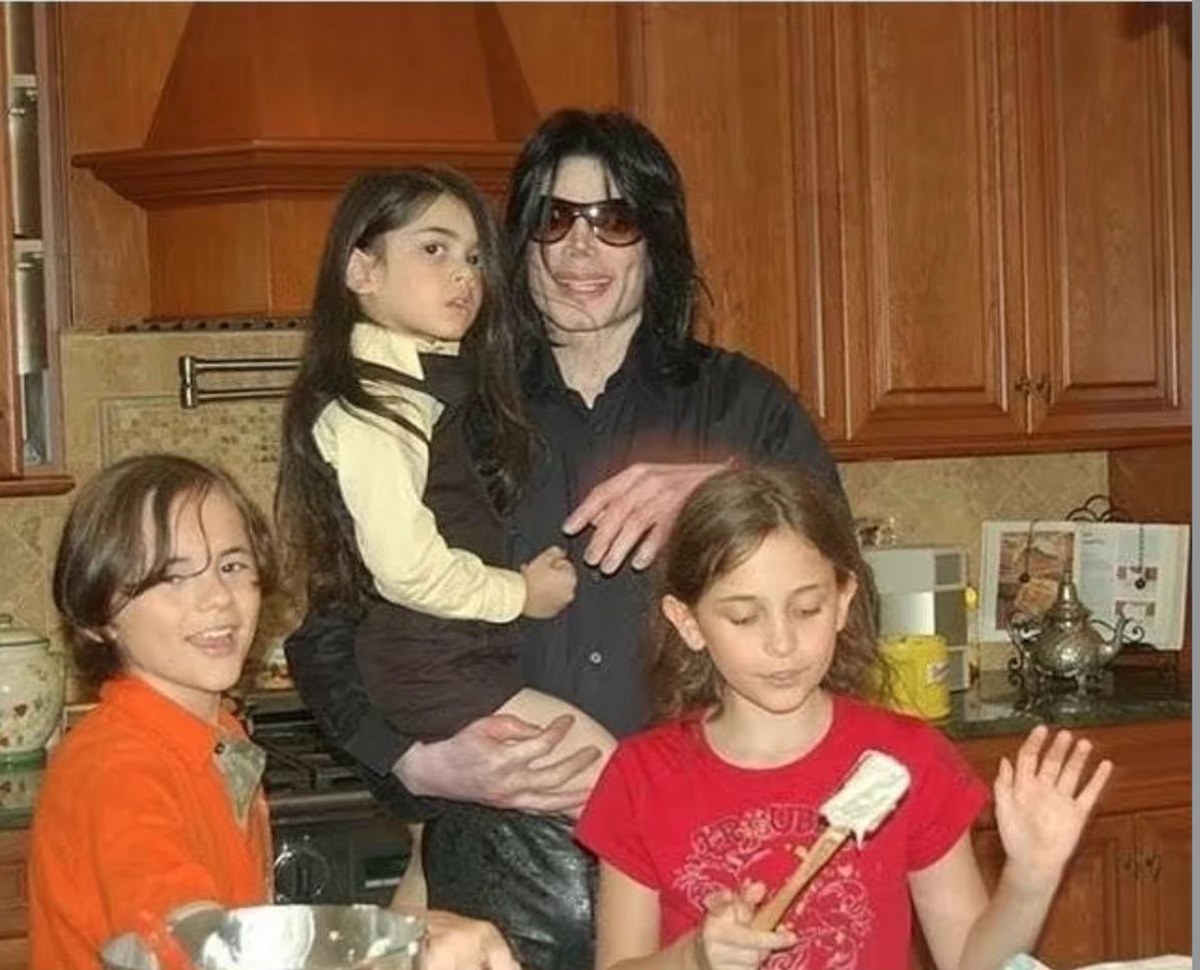
Michael Jackson was not normal.
Michael Jackson was not normal.
That sentence should not be controversial.
Nothing about his life was normal.
He was a child star before he had any real chance to be a child.
Adult pressure, adult expectations, adult environments, adult money, adult moods and adult danger surrounded him before his nervous system had any chance to grow in peace.
He lived under a violent father.
He carried adult responsibility too young.
He worked when other children played.
He performed when other children were learning how to just exist.
He was watched, judged, shaped, praised, criticised, controlled and consumed before he could possibly understand what that level of attention does to a person.
Then, years later, people looked at the adult result of that childhood and called him weird.
Of course he was weird.
What else was he supposed to be?
A well-adjusted bloke called Dave with a mortgage, a fantasy football league and a barbecue he gets weirdly possessive over?
Come on.
Michael Jackson's life was not built on ordinary foundations, so expecting an ordinary house is ridiculous.
As someone diagnosed neurodivergent, and as someone who has spent years researching ADHD, autism, trauma and CPTSD because I had to understand my own brain before I lost what was left of my mind, I see something in Michael that many people miss.
I am not diagnosing him.
I am not sticking a label on a dead man and calling it fact.
But I do see signs of a nervous system shaped by trauma.
A man searching for safety.
A man stuck in emotional time travel.
A man trying to repair his own missing childhood by giving wonder to others.
Someone pouring from an empty cup because other people's pain felt impossible for him to ignore.
And if you know CPTSD, really know it, not from a motivational Instagram square but from living inside a body trained for threat since childhood, then you recognise the pattern.
CPTSD is not just "being upset about the past."
PTSD is often linked to one traumatic event. War. Assault. A serious accident. One terrifying thing that leaves the brain altered.
CPTSD is different.
It often comes from repeated trauma over time, especially in childhood. Fear isn't an event. It becomes the environment. Danger isn't a moment. It becomes the pattern. The people who should protect you can also become the people you fear.
That changes a person.
It can affect boundaries, trust, attachment, emotional regulation and the desperate need to make everyone else okay so the danger stops.
At times, it can overlap with traits people associate with ADHD and autism, because the nervous system is not a neat little filing cabinet, no matter how badly people want it to be.
So when people say, "Well, his brothers turned out okay," I want to launch myself into the nearest hedge.
Firstly, did they?
Secondly, siblings do not get the same childhood just because they had the same parents and the same address.
Look at your own family.
Are you all identical?
Of course not.
Every child gets a different version of the same parent.
Different timing, pressure, money, roles, expectations, wounds and responsibilities. A sensitive child, a gifted child, a daughter, a son, the eldest, the youngest, the one who performs, the one who keeps quiet.
Same house, different childhood.
Michael was not simply one of the Jackson children.
He was the engine.
The miracle.
The money.
The face.
The voice.
The one the world wanted.
Gifted children often have different needs. Bigger sensitivities. Stranger wiring. Deeper loneliness. More pressure. More projection. More adults using the talent while forgetting there is still a child underneath it.
No one else knew what it felt like to be Michael Jackson.
Not his brothers, sisters, parents, managers, fans or critics.
Nobody.
And I think that loneliness is written all over him.
In the music.
In the interviews.
In the way he spoke about children.
In the way he built Neverland.
In the way he seemed desperate to create a place where nobody had to feel the way he felt.
Neverland was not simply a house.
It was a wound with gates.
A beautiful wound, yes. Strange too. Generous. Complicated.
A place that deserves adult conversation, not cartoon horror-story nonsense from people who think nuance is an allergy.
A traumatised man built a childhood paradise because nobody protected his.
Trains. Arcades. Flowers. Animals. Rides. Music.
A cinema where sick children could lie in hospital beds built into the walls and still feel included.
Families getting one day away from the smell of hospitals, the sound of machines, the panic of test results, and the quiet terror adults try to hide from children but never quite manage.
That is what some of us see.
A man trying to turn pain into refuge.
A man trying to build softness out of damage.
A man trying to heal others with the thing he never received enough of himself.
To people who do not understand that trauma response, it may look like crossed boundaries. That conversation matters, but it is not the same conversation as guilt.
And it never has been.
That is the difference the media keeps flattening.
They take complexity and crush it into suspicion.
They take trauma and call it deviance.
They take empathy and call it grooming.
They take difference and call it danger.
They take a man they never understood and keep selling the ugliest possible version of him because ugliness pays.
The public keeps buying it.
Not everyone, but enough.
Enough for the lie to keep breathing.
Enough for the documentaries to keep coming.
Enough for the X threads to keep crawling out of the drain every time his name trends.
Enough for people to still say, "But wasn't he guilty?" while standing on the wreckage of a verdict they have never bothered to read.
So here is the truth, simple and clean.
So here is the truth, simple and clean.
Michael Jackson was investigated.
He was charged.
He stood trial.
The prosecution presented its case.
The jury heard the evidence.
The jury found him not guilty.
That is not fan fiction.
That is legal reality.
On Vindication Day, I am not asking you to worship him, pretend he was perfect, ignore uncomfortable facts, or flatten a complicated human being into a saint.
I am asking you to stop mistaking discomfort for proof.
Stop treating repetition as evidence.
Stop pretending a dead, acquitted man has fewer rights than a living headline.
Look again.
Properly.
Without the circus music.
Without the tabloid training.
Without the lazy phrases.
Without the need to feel morally superior because you joined the biggest pile-on in pop culture history and called it justice.
Look at the man.
The child he was.
The world that built him.
The trial that broke him.
The verdict they still try to bury.
Look at the way he walked out legally innocent and still never truly got free.
That is what hurts.
The cost.
He got the verdict, but he lost things no court could return.
His peace. His home. His trust. His softness. His light.
You can see it if you are willing to look.
A man who once seemed lit from inside became dimmer.
A man who moved like music itself started looking like movement hurt.
A man who gave the world escape looked trapped in the ugliest story the world could write for him.
A man who built magic was mocked until the magic had nowhere left to live.
That is why June 13th is not simple celebration.
It is grief with a legal document in its hand.
It is anger.
It is relief.
It is memory.
It is a reminder that a verdict matters even when the defendant is strange.
It is a reminder that innocence should not expire because the media finds it inconvenient.
It is a reminder that the public can be manipulated, especially when the lie is ugly enough, loud enough and repeated often enough.
And it is an invitation.
Do not believe me.
Go and look.
Follow the evidence instead of the noise.
Then ask yourself the question again.
What do you see?
Do you see the monster they sold you?
Or do you see the man they buried underneath it?
Because on June 13th 2005, the law saw enough to say not guilty.
So before you ask what Michael Jackson was hiding, ask yourself this: when you looked at him and saw something sinister, were you seeing him, or were you exposing yourself?
Source documents and further reading
For readers who want to start doing their own research with legal documents, court material and detailed allegation timelines, these are useful starting points:
PopCrown Legal Vault, available inside the PopCrown app or free on our website EXPLORE section
TheMichaelJacksonAllegations.com
FBI Vault: Michael Jackson files
https://open.spotify.com/show/5OFkjoLLWkCAmvqiy2HcoV?si=eDRlxK5cQrmnd9GRshbRcA
https://youtu.be/ZxNDb2PVcoM?is=5KeI5cXT5_Eo-Tx
Want More Fan Stories?
Subscribe to our newsletter for weekly updates, exclusive content, and the latest from the PopCrown community.
Subscribe to Newsletter