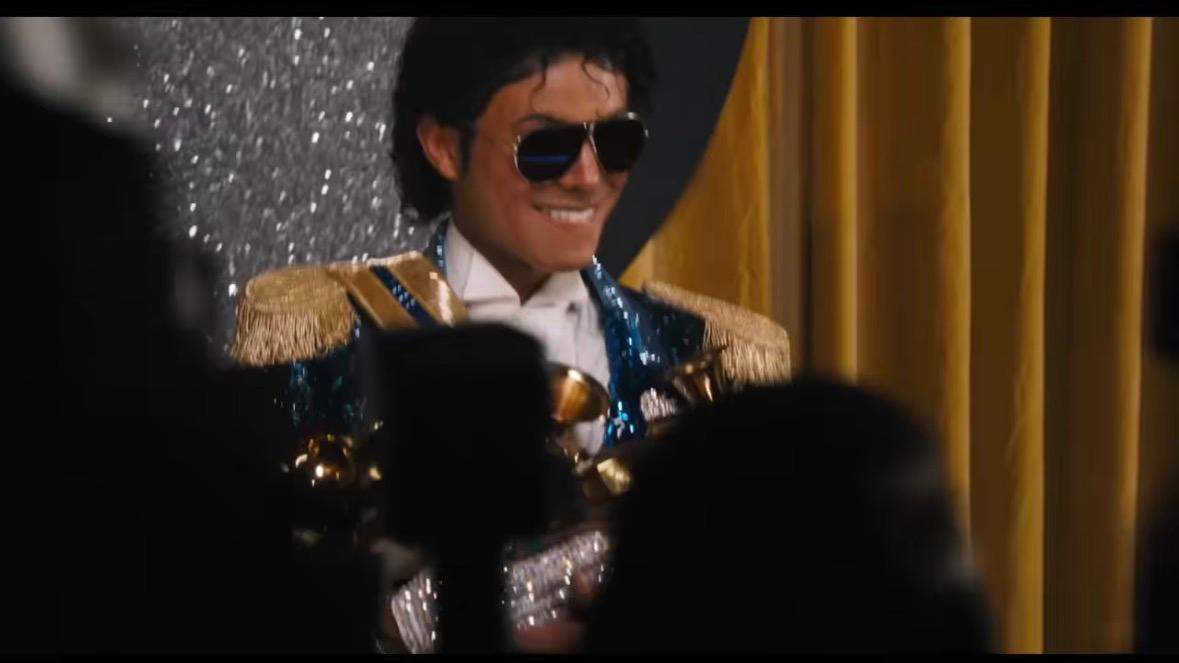
I Went to See "Michael" and Got Punched in the Childhood.
I went into the Michael movie expecting to have opinions.
Obviously.
I'm a Michael Jackson fan of over 40 years, which means I can spot lazy nonsense, emotional manipulation and badly researched MJ content from at least three postcodes away.
So yes, I went in prepared.
Prepared to enjoy it.
Prepared to be annoyed by it.
Prepared to sit there silently judging wigs, casting choices, timelines, song placement, dramatic pauses, and whether anyone involved had actually met an MJ fan before or just skimmed a Daily Mail comment section and thought, "Yeah, that'll do."
And honestly?
It was good.
Not perfect.
Not the entire Michael Jackson story.
Not some deep psychological breakdown of every complicated layer of the man, the myth, the madness and the moonwalk.
But good.
It gave us the basic journey. Gary, Indiana to global superstardom. The family. Motown. The Jackson 5. The work. The pressure. The isolation. The genius. The climb. The weight of becoming Michael Jackson before the world even understood what it had created.
And with that in mind, let's start with the critics.
Because apparently we must.
The film takes us up to the Bad Tour in 1988, which is important because, despite what professional misery merchants seem desperate to pretend, the allegations were not part of that time period.
But of course, that hasn't stopped the usual suspects crawling out of their damp little basements to bang on about them anyway.
Because every single conversation about Michael Jackson has to be dragged back through the same tired, lazy, tabloid-fed swamp by people who have read half a headline, watched one documentary, and now think they're qualified to give a legal TED Talk in a Facebook comment box.
No, Karen.
You are not the Crown Prosecution Service because you watched Channel 4 in your pyjamas.
The media criticism has been painfully predictable.
"Why didn't the film address the allegations?"
Because they didn't happen in the part of his life the film covered, you absolute spoon.
And let's be honest, even if the film did cover them accurately, they'd still complain.
Because they don't want accuracy.
They don't want court evidence.
They don't want timelines.
They don't want context.
They don't want legal history.
They want a guilty narrative on a cinema screen in Dolby surround sound.
They want the film to say what they already believe, so they can sit back smugly with their popcorn and pretend gossip is justice.
At this point, we may as well throw in a full 3D screening of the Neverland train station so the audience can truly appreciate standing inside one of the most famous timeline problems in modern allegation history.
You know. For the immersive experience.
Respectfully, they can fuck off.
I am so bored of it.
Utterly bored.
Bored to my bones.
Bored deep into my apparently heartless, victim-blaming soul.
In fact, I'm now experiencing boredom in places I didn't even know could experience boredom.
It is the same regurgitated nonsense every time.
"He paid a kid off."
"Would you let your kids sleep in his bed?"
And somehow these two sentences are supposed to be the big mic drop.
They say it like they've cracked the case wide open.
Like somewhere in the middle of Twitter, between a dog video and a woman arguing with a self-checkout machine, Dave from Basildon has finally solved what lawyers, judges, juries and investigators couldn't.
The arrogance is breathtaking.
The ignorance, Olympic level.
If there's one thing I wish would make a comeback, it's the soul-destroying shame stupid people used to feel before announcing their stupidity out loud.
Now they just pop it in a comment box with a crying-laughing emoji and call it critical thinking.
Here's the thing.
Neither of those points, regardless of how anyone answers them, magically proves a fucking thing.
Not one thing.
They are not evidence of guilt.
They are lazy questions people throw around because they sound dramatic and require absolutely no effort to understand.
Both points have been unpacked, argued, challenged and examined in actual legal settings.
Not on TikTok.
Not in a pub.
Not in the Daily Mail comment section where brain cells go to die.
In court.
With evidence.
With cross-examination.
With scrutiny.
With legal standards.
With people who had to do more than type, "Who sleeps in a bed with other people's kids?" under a tabloid clickbait post like they'd just discovered the lost scrolls of common sense.
But that's the problem, isn't it?
Reading is hard.
Court transcripts are long.
Thousands of pages long.
Nuance hurts people's little heads.
And common sense? You'd think they were being charged every time they used it, the way they refuse to dust it off and give it a spin.
So instead, they repeat the same tired lines and act like the rest of us are stupid, delusional or unwilling to acknowledge the "dark truth."
No, babes.
Some of us simply read past the headline.
Radical, I know.
Anyway.
Back to the film, before my blood pressure starts doing the choreography from Smooth Criminal.
Because there was one thing I genuinely wasn't ready for.
The nostalgia.
And I don't mean "aww, that was nice" nostalgia.
I mean an emotional gut punch.
The lump-in-the-throat kind.
The kind that creeps up quietly, grabs you by the childhood and knocks the air out of you.
I expected to watch a film about Michael Jackson.
I did not expect to be thrown straight back into being a little girl again.
Back to the posters on my wall.
The VHS tapes we recorded Thriller on.
The TV specials we ran home from youth club for.
The waiting for a performance like it was a national event.
The way the whole room changed when Michael appeared on screen.
That feeling of being a child and seeing someone so magical, so out of reach, so beautiful, so beyond ordinary life, that you didn't even know what to do with it.
You just sat there.
Wide-eyed.
Completely taken in.
That is what hit me.
Not just Michael.
My childhood Michael.
The Michael who existed before the noise.
Before the headlines.
Before the arguments online.
Before grown adults with profile pictures of sunsets started calling themselves "truth seekers" while repeating tabloid sewage they found on Reddit at 2am.
This film brought back the feeling of being an 80s kid who found calm, peace, safety and pure, ridiculous happiness whenever Michael sang, danced or smiled.
And that feeling is something I haven't seen enough people talk about.
For those of us who lived through Michaelmania, this wasn't just watching a biopic.
It was being dropped back into a time when Michael Jackson was everywhere.
And I mean everywhere.
On the telly.
On the radio.
On bedroom walls.
On lunchboxes.
In playgrounds.
In living rooms.
At family parties.
In every school talent show where some poor kid attempted a moonwalk on carpet and nearly dislocated a hip.
He wasn't just famous.
He was part of the atmosphere.
You breathed him in without even realising it.
And at its best, the film captured that.
Not perfectly.
But enough.
Enough to make something in me remember.
The recreations of those famous performances were honestly mind-blowing.
Mesmerising.
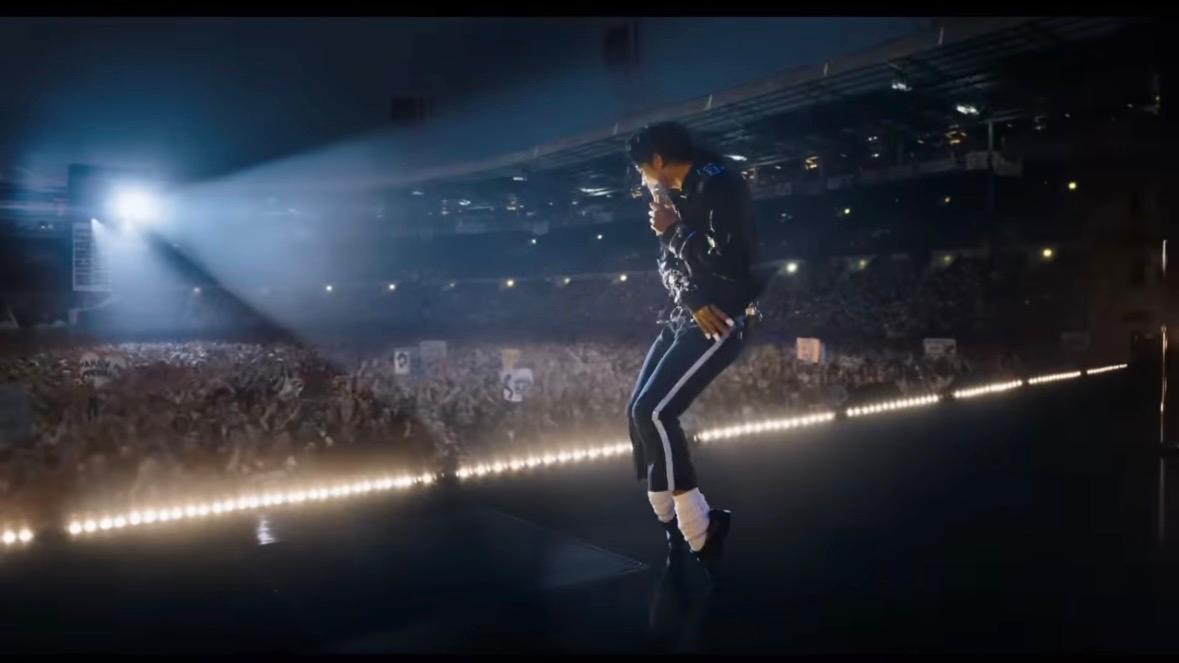
And I will stand by this with my whole chest: Jaafar Jackson absolutely embodied his uncle.
Not copied.
Not mimicked.
Embodied.
There is a difference.
The hands.
The voice.
The posture.
The stillness.
The softness.
The sharpness.
The way Michael could look fragile one second and like an unstoppable force the next.
That is not easy to do.
Because Michael Jackson was not just choreography.
He was not just a hat, a glove and a few spins.
He had an energy people have tried to imitate for decades, and most of them end up looking like someone's overly enthusiastic uncle at a wedding after three lines of cocaine and seven Bacardi and Cokes.
Jaafar didn't do that.
He understood the aura.
And you could tell he worked hard.
Really hard.
There were moments where I physically gasped.
Not because it was a decent impersonation.
Because for a few seconds, my brain genuinely went, "Holy shit. That's Michael."
That happened to me more than once.
And it gave me chills.
Some of us have been studying this man longer than some critics have been alive.
We know every move.
Every ad-lib.
Every costume.
Every tour.
Every stage angle.
Every lighting effect.
We know when something feels off.
And we know when something lands.
Jaafar landed.
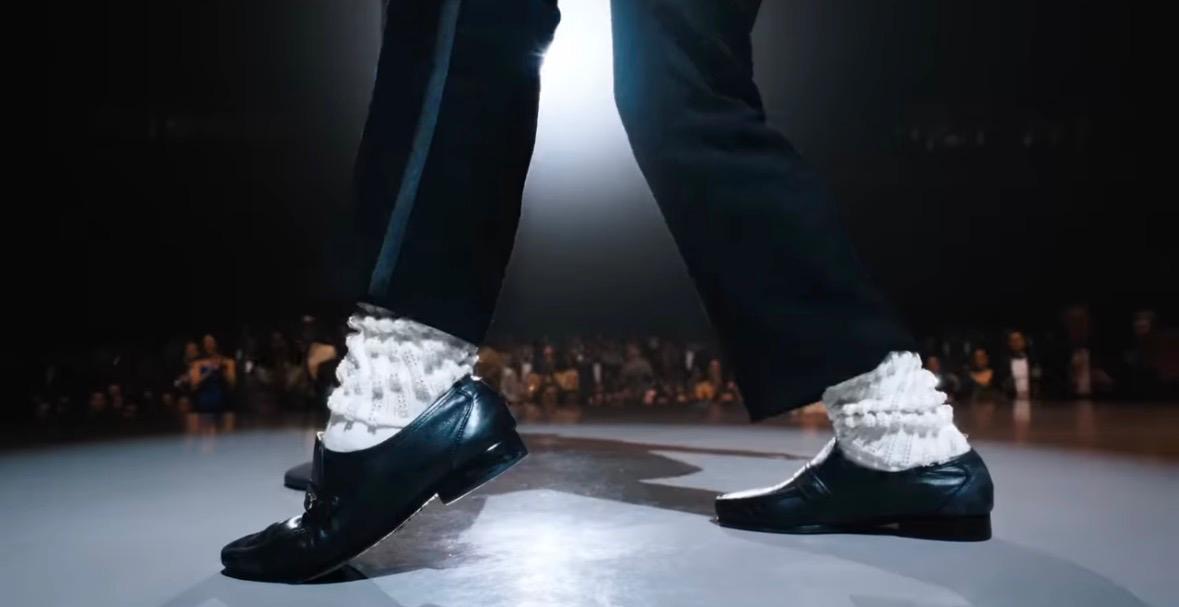
His entire performance had me locked in.
And that surprised me.
Because I thought I would get emotional at the obvious parts.
The childhood trauma.
The family pressure.
The loneliness.
The cost of fame.
But no.
It was the performances that got me.
It has taken me almost a week to understand why.
I think I know now.
The performances hit hardest because that is where Michael lived.
And where he will always live.
That is where he made sense.
On stage, everything lined up.
The shyness disappeared.
The fear had somewhere to go.
The pressure became power.
The pain became rhythm.
The confusion became magic.
That is one of the things the film captured beautifully.
Michael off stage and Michael on stage were two completely different people.
But somehow, both were true.
Off stage, he was shy. Soft. Awkward. Searching. Sensitive. Often unsure where he fitted.
On stage, he was fearless.
Commanding.
Electric.
Untouchable.
The film reminded us of the complexity of being human.
Of being him.
And God knows we seem to be forgetting complexity more with every passing day.
He was determined and scared.
Brave yet vulnerable.
Ambitious but deeply wounded.
Powerful and painfully gentle.
That contradiction is Michael Jackson.
And if you don't understand contradiction, you will never understand him.
Which brings me to Joe.
This is where people may get uncomfortable.
Good.
Let's be uncomfortable for a minute. Character building and all that.
Joe Jackson was not shown as some fluffy misunderstood sitcom dad, and nor should he have been.
He was hard.
He was frightening.
He was controlling.
He caused damage.
But he was also far more complicated than the lazy cartoon villain version people like to wheel out.
We need to remember the world Joe came from.
Michael was born in 1958.
Before the Civil Rights Act.
Joe was raising Black boys in America after growing up under Jim Crow.
That matters.
It doesn't excuse everything.
But it explains a hell of a lot.
Joe came from a world where softness was dangerous.
Where Black men had to be tough, disciplined, careful, alert and better than everyone else just to survive.
Where one wrong move could cost you more than your reputation.
He wasn't preparing his sons for the world we like to imagine.
He was preparing them for the world he knew.
And the world he knew was brutal.
Was it abuse by today's standards?
Yes.
Would we parent that way now and call it acceptable?
No.
But was it seen the same way then?
No.
And anyone who grew up in the 60s, 70s or 80s knows physical discipline was everywhere.
Homes.
Schools.
Streets.
Churches.
Family parties where someone else's mum could slap you and your own mum would tell you off for making her do it.
Different time.
Different rules.
Different damage.
We can sit here in 2026 with our therapy language, parenting podcasts, gentle parenting Instagram reels and oat milk nervous systems, and we can see clearly what was wrong.
But hindsight is a wonderful yet useless gift.
Because people don't parent with hindsight.
They parent with what they know.
What they survived.
What they fear.
What they think will protect their children.
And now, at 47, with three kids and three grandchildren behind me, I see Joe differently than I did when I was younger.
Not softer.
Not excused.
Just clearer.
I see a complex man.
A man full of his own trauma with no language for it.
No healing tools.
No understanding of emotional damage.
No handbook.
No gentle parenting accounts telling him to breathe through the trigger and validate Tito's feelings.
He protected and provided.
That was the job description for men back then.
Protect.
Provide.
Keep the roof up.
Keep the family fed.
Keep the wolves away.
And whether people like it or not, Joe did that.
He got his boys out of Gary, Indiana.
He gave them discipline, structure, opportunity and a way out.
And here's the uncomfortable truth.
Joe was the lesser of two evils.
Because the industry was always waiting.
Always.
The music industry would have chewed Michael up even earlier if it had been able to get him away from his family sooner.
Joe knew that.
He may not have known how to love Michael in the way Michael needed.
But he knew snakes when he saw them.
And he was surrounded by them.
Joe kept them close because he understood what was outside the door.
As hard as that is to sit with, he was right.
Michael had resilience.
Determination.
Discipline.
Ambition.
A work ethic most modern artists couldn't find with a sat nav and a motivational quote.
Much of that was instilled early by Joe.
It came at a cost.
A painful one.
But without Joe, we do not get Michael Jackson.
That is the uncomfortable truth.
Not the cosy one.
Not the easy one.
But the truth rarely arrives wearing fluffy slippers and offering you a biscuit.
The film handled that tension well.
It showed how Michael was different.
Not just talented.
Different.
He felt more.
Needed more.
Absorbed more.
Carried more.
He needed compassion in a world that kept handing him pressure.
He was a child with an adult burden, then an adult still carrying the child that never got to fully exist.
And I think that is what people miss when they try to judge Michael by normal standards.
There was nothing normal about his life.
Nothing.
No one has ever had the same life as Michael Jackson.
Not one celebrity.
Not one musician.
Not one child star.
People love to compare him to ordinary life, but ordinary life was never the measurement.
He wasn't the bloke next door.
He wasn't you.
He wasn't me.
He wasn't some random man from accounts with a weird hobby and a glitter jacket.
He was Michael Jackson.
A global phenomenon before he was old enough to understand what that meant.
A child star.
A Black superstar in a racist industry.
A perfectionist.
A genius.
A deeply sensitive human being.
A man raised in front of the world and then punished for not turning out normal.
How the hell could he?
People demand normality from someone whose life was anything but normal, then act shocked when his humanity doesn't fit neatly into their little beige boxes.
Michael saw the world differently.
He found joy in the branches of trees.
He saw splendour in the smallest flower.
He cared about children, animals, the planet, the poor, the sick, the lonely, the forgotten.
And yes, I know that makes the cynical people twitch.
Good.
Twitch away.
Some people are so dead inside they think compassion must be suspicious.
That says more about them than it ever did about him.
Michael had a genius mind, a compassionate heart and a deep empathy for humanity.
That is not fan fiction.
That is the thread running through his work, his speeches, his performances, his giving, his lyrics, his interviews and the way people who truly knew him spoke about him.
He believed he had a bigger purpose.
Not just to entertain.
Not just to sell records.
Not just to dance better than everyone else and make the rest of the industry look like they were moving through custard.
He believed he was here to bring happiness.
To bring light.
To heal.
And that is where the film worked for me.
Not because it answered every question.
It didn't.
Not because it covered every chapter.
It couldn't.
Not because it gave us the full complexity of Michael Jackson.
That would take about 400 hours, a small emotional support team and probably a court-appointed therapist for the audience.
But it reminded me of the feeling.
The magic.
The scale.
The loneliness.
The brilliance.
The cost.
The humanity.
It reminded me why I became a fan before I had the words to explain it.
It reminded me why millions of us stayed.
Not because we are stupid.
Not because we are blind.
Not because we don't know the controversies, the accusations, the headlines, the court cases or the arguments.
Trust me, we know.
Some of us have read more documents than the people paid to write about him.
We stayed because beneath all of that noise was an artist and a human being who reached something in people that very few ever have.
And I felt that again in the cinema.
Sat there as a 47-year-old woman, mother of three, nanny of three, with a lifetime of chaos, humour, grief, love and sarcasm behind me, suddenly feeling like the little girl who once watched Michael Jackson and believed magic was real.
That is what this film gave me.
And I wasn't ready for how much I needed it.
There will be people who hate it.
There will be people who pick it apart.
There will be critics who wanted a prosecution case with choreography.
There will be professional outrage merchants furious that the film dared to show Michael Jackson as a human being rather than the tabloid monster they've spent years trying to sell.
Let them be furious.
They've had the microphone for long enough.
This film gave some of the feeling back.
And for those of us who remember what it was like to live through Michael at his peak, that matters.
Because beyond every tabloid article, every salacious headline, every lazy documentary, every smug critic and every uninformed comment from someone whose research begins and ends with "I heard somewhere," there was a man.
A man who felt deeply.
Who cared deeply.
Who carried more than most people could survive.
Who gave the world beauty while the world kept demanding blood.
He was not perfect.
Nobody is.
But he was rare.
He was a gift to this world that the world simply wasn't ready for and couldn't understand.
Michael Jackson truly believed he was here for a bigger purpose.
To bring happiness.
To bring light.
To heal.
And I don't care how much that angers the ignorant in society.
Because he was absolutely right.
Want More Fan Stories?
Subscribe to our newsletter for weekly updates, exclusive content, and the latest from the PopCrown community.
Subscribe to Newsletter